
There is a specific kind of magic that happens when you’re parked deep in a national forest or waking up to a desert sunrise in your RV. You’ve successfully escaped the noise, the traffic, and the beige walls of a cubicle. But for most of us, "off-grid" doesn’t mean "off-line." Whether you need to hop on a Zoom call, check the weather radar, or just stream a movie after a long hike, having a reliable portable wifi hotspot is what turns a stressful trip into a sustainable lifestyle.
Choosing the right device can feel like navigating a maze of technical jargon. You’ll see terms like "millimeter wave," "LTE-Advanced," and "Cat-20," but what actually matters when you’re miles from the nearest Starbucks? It comes down to three things: battery life, data limits, and signal reach.
Let’s take a closer look at how to weigh your options and find the perfect travel wifi setup for your next adventure.
The Power of Portability: Battery Life and the StarMini
When you are truly off-grid, think tent camping or a van setup without a massive lithium battery bank, power is your most precious resource. This is where the distinction between hardware types becomes vital.
Most high-end hotspots on the market, like the Netgear Nighthawk series, offer great speeds but can be notorious battery hogs. If you are using your device as a primary hub for multiple phones and laptops, you’ll often find yourself tethered to a USB port just to keep it alive.
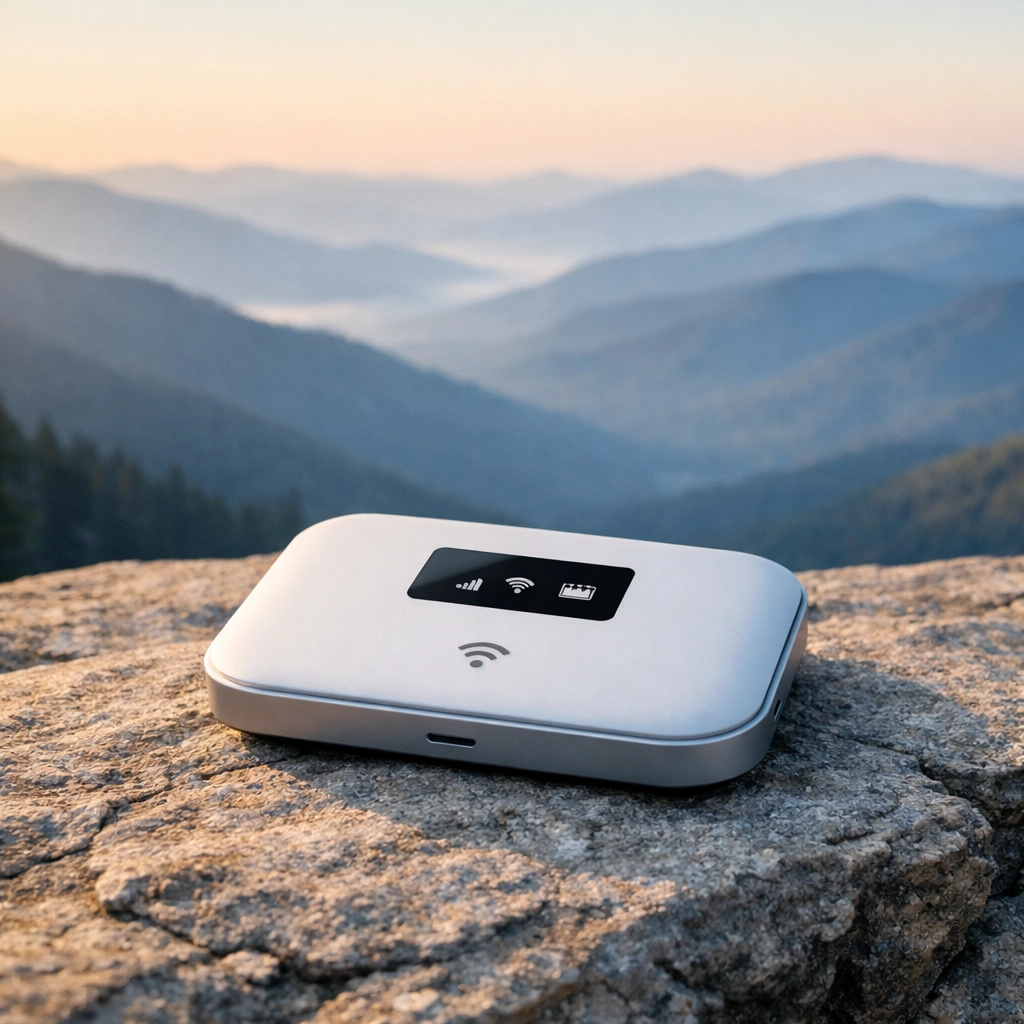
This is why we designed the StarMini Traveler Internet. Unlike stationary routers, the StarMini is a fully battery-operated device. It’s built for the person who wants to throw their internet in a backpack and head to a ridgeline.
Why battery life is a game-changer for off-grid use:
- Zero Setup: You don’t need to find an outlet or wire it into your RV’s 12V system.
- Flexibility: You can move the device to the highest point of your campsite to grab a better signal without worrying about cord length.
- Backup Power: In a pinch, many portable hotspots can even act as a small power bank for your phone.
Unlimited Data vs. The "Throttling" Trap
If you’ve ever tried to use a standard phone hotspot for RV wifi, you’ve probably hit the "wall." Most cellular carriers offer "unlimited" plans that come with a massive asterisk: after 15GB or 30GB of hotspot usage, your speeds are throttled to a crawl. In 2026, 15GB is barely enough to download a few system updates, let alone run a remote office.
When comparing portable wifi hotspots, you have to look past the hardware and look at the service plan. Off-grid adventures require true unlimited data. Whether you are navigating via GPS, uploading high-res photos, or letting the kids watch YouTube, you shouldn't have to keep a data tally in your head.
At Star Wifi, we focus on providing nationwide coverage without those frustrating data caps. This is the primary reason why travelers move away from "budget" devices like the SIMO Solis or GlocalMe, while those devices are great for light international travel, they often rely on expensive "pay-as-you-go" credits that vanish the moment you start streaming HD video.
Comparing the Lineup: Portable vs. Residential Hardware
Not every off-grid adventure looks the same. A solo hiker needs something different than a family in a 40-foot Class A motorhome. Understanding the hardware categories will help you decide which tool fits your kit.
1. The Portable Workhorse: StarMini
As mentioned, this is the ultimate tool for the mobile adventurer. It’s compact, runs on an internal battery, and is designed to move with you. If you spend your days outside and your nights in different spots, this is your best bet for consistent travel wifi.
2. The Basecamp Solution: Star40 Residential
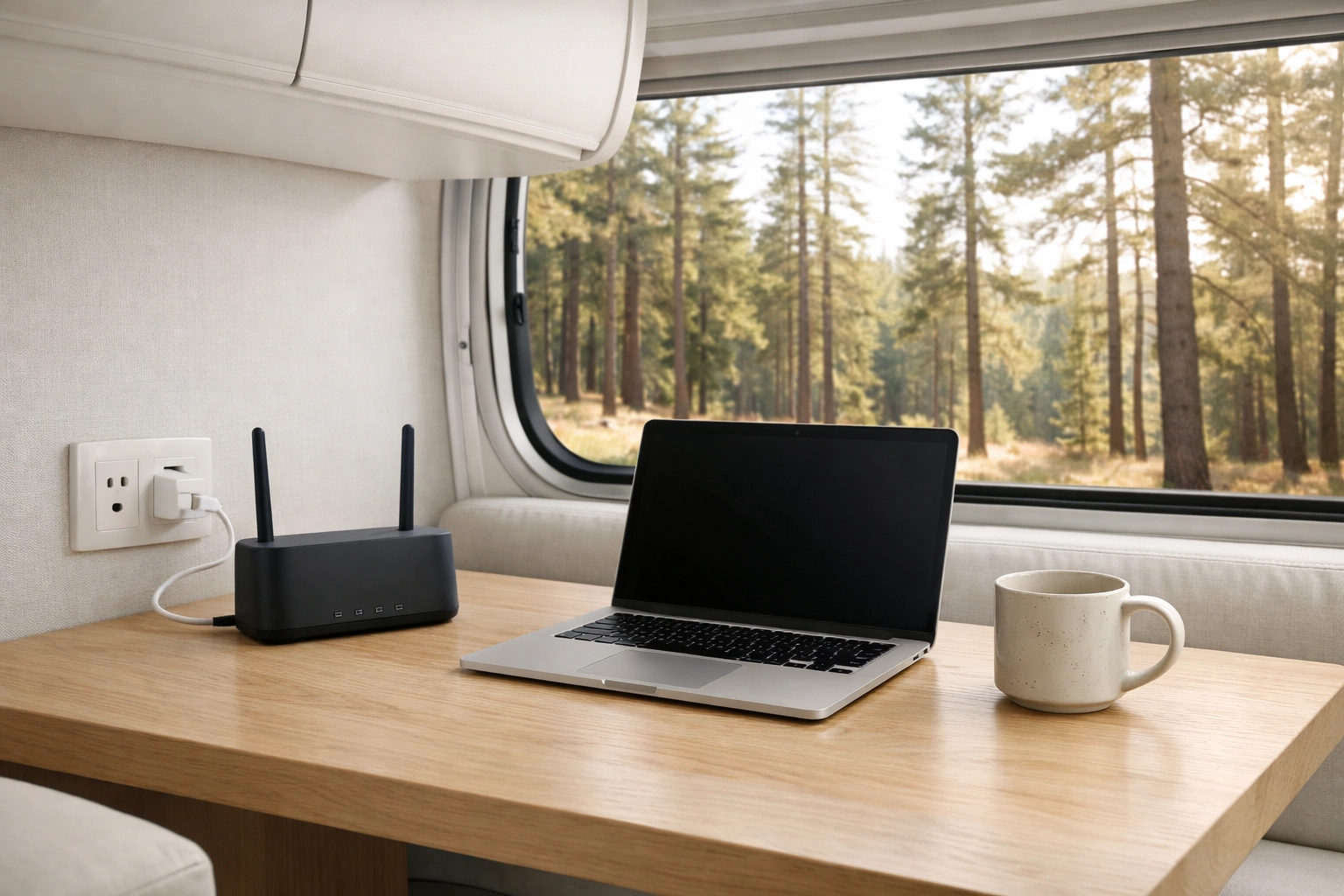
If your "off-grid" adventure involves a cabin or a permanent RV spot with access to power, a residential-style device like the Star40 is often a better choice. These are plug-and-play devices that include an AC adapter. Because they don't rely on a small internal battery, they often have more powerful internal antennas that can pull in signals from further away.
3. The Power User: Star50 Business
For those who are running a business from the road, the Star50 offers the most robust connection. Like the Star40, it’s a plug-in device, but it’s built to handle higher device counts and heavier data loads. If you have four people all trying to stream and work simultaneously, the Star50 is the "big gun" you want in your cabinet.
Signal Strength: Why Your Phone Isn't Enough
A common question we hear is, "Why can't I just use my phone?" It’s a fair point, but there’s a technical reality to off-grid travel: phones are designed for calling first and data second.
Portable wifi hotspots have dedicated antennas specifically tuned for data reception. When you are in a "fringe" area, where your phone shows one bar of LTE, a dedicated hotspot can often pull in a stable, usable 4G or 5G signal. This is because the surface area of the antennas inside a device like the StarMini or Star40 is significantly larger than what can fit inside a slim smartphone.
Furthermore, using your phone as a hotspot creates heat and drains your phone’s battery life exponentially. If you’re hiking and your phone dies because it was busy providing wifi to your tablet, you’ve lost your primary safety device. Keeping your internet and your phone separate is just smart adventuring.
How to Choose: A Quick Checklist
Still not sure which direction to go? Ask yourself these four questions:
- Do I have a constant power source? If yes, go for the Star40 or Star50. If no, the battery-operated StarMini is non-negotiable.
- How many devices am I connecting? If it’s just you and a laptop, a portable unit is perfect. If you’re outfitting an entire RV with smart TVs and multiple tablets, look at the residential plug-in options.
- Am I staying put or moving daily? For the "digital nomad" who changes scenery every 24 hours, portability is king.
- What is my data usage really like? Check your last phone bill. If you use more than 50GB a month at home, you will definitely need an unlimited plan for the road.
Staying Connected Anywhere, Anytime
The landscape of rural internet has changed drastically over the last few years. You no longer have to choose between a beautiful remote location and a functional career. By picking a device that prioritizes battery efficiency and pairing it with a service that understands the needs of travelers, you’re setting yourself up for success.
Whether you're exploring the rugged terrain of Nevada or parked at a lush resort in South Texas, the right portable wifi hotspot ensures that "off-grid" remains a choice, not a limitation. You’ll surely be a professional at navigating the digital nomad lifestyle once you have a connection you can actually trust.
Ready to find your perfect match? You can explore our full range of devices and find the plan that fits your adventure. The wild is calling, but now, you can actually answer.

Frequently Asked Questions
Can I use these hotspots while the vehicle is moving?
Yes! One of the biggest advantages of cellular-based portable wifi is that it works while you’re cruising down the highway, unlike some satellite options that require you to be stationary and have a clear view of the sky.
What happens if I go to a very remote area?
While our devices offer nationwide coverage, they do rely on cellular towers. If you are in a deep canyon or a complete dead zone, signal may be limited. However, our hardware is designed to "reach" further than standard consumer electronics.
Is it hard to set up?
Not at all. We focus on a "plug-and-play" experience. Whether it's the battery-powered StarMini or the plug-in Star40, you simply turn it on, find the network on your device, and enter the password. You'll be online in minutes. For more details on the setup, check out our guide on how to connect devices to your wireless network.
Leave a Reply